

Your team members are talented.
But are they actually working together?
The most expensive problems are rarely in the strategy deck. They sit in the silence after a difficult meeting. In the feedback that was never given, or never really heard. In the manager who looks fine, but whose team is quietly disengaging.
We work where performance is actually built: in the relationships, the patterns, and the unspoken agreements between people.
What’s actually at stake
When HR leaders and CEOs look honestly at what their organisations spend on team dysfunction, the numbers don't lie.
Time lost to workplace conflict: 2.8 hours per employee per week
--
Cost of unresolved conflict: USD 359 billion in paid hours annually
--
Drop in team performance when leaders lack resilience: -23%
--
An invisible tax on your business
--
Time lost to workplace conflict: 2.8 hours per employee per week -- Cost of unresolved conflict: USD 359 billion in paid hours annually -- Drop in team performance when leaders lack resilience: -23% -- An invisible tax on your business --
Source : CPP Global - BetterUp Labs
What teams actually gain when the work gets done
Psychological safety is the #1 predictor of team performance (Google)
Effective managers lift team performance
by +24%
(BetterUp, 1,600 teams)
Strong belonging cuts turnover risk by 50% and brings the performance to +56%
(BetterUp)
Average ROI on organisational coaching:
6.4x to 7x
(BetterUp/PwC)

This is for you if you are experiencing…
Post-restructuring. New team composition, old tensions still in the room. The same conflict comes back every quarter, with a different label.
Leadership transition. A new leader takes over a team built around someone else. One person used to carry the energy. Nobody knows how to share the load.
Cross-functional or multicultural. Friction at every handoff. People are polite. Trust is thin.
High-performing but flat. Nothing is "wrong", but meetings end without decisions and nothing is actually moving.
AI-driven change. Roles are being redefined. People are anxious. The team needs new rules and nobody is setting them.
Hybrid fracture. Remote and hybrid broke the culture. The high-engagement people are tired of carrying it alone.
Post-merger or post-acquisition. Two cultures collided. Decisions now happen on email instead of in the room.
Training, Facilitation, Team Coaching: Not the same thing
➡
Swipe to see the full comparison →

The 9 topics we work on
-
![Snow-covered mountain range under a starry night sky with a faint pink hue.]()
01. Mission, vision, values that actually guide decisions.
Not a poster. A working set of agreements that holds when a difficult choice has to be made. The North Star of the team.
-
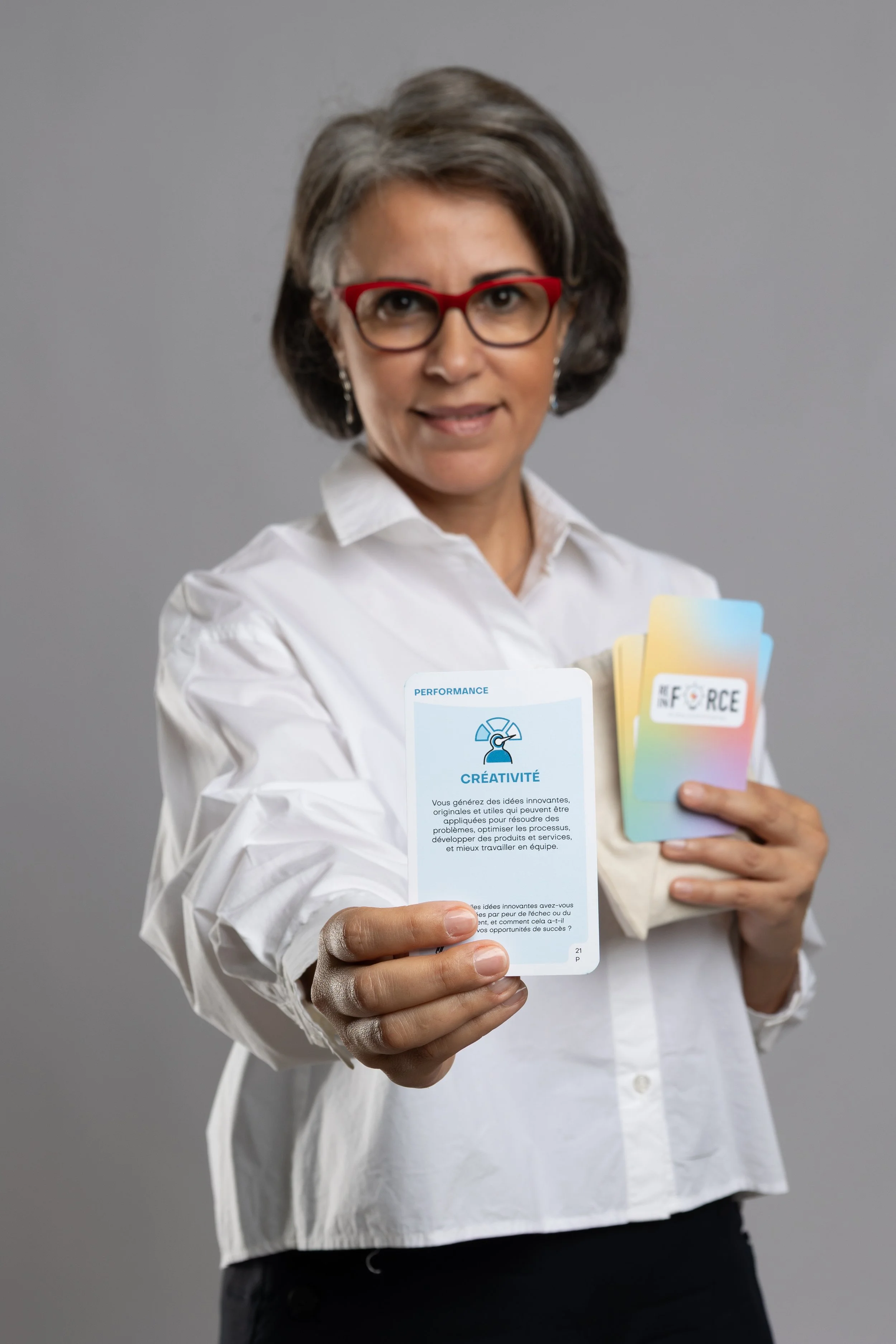
![A woman with short gray hair, wearing red glasses and a white shirt, holding colorful brochures and a white sheet with a blue icon and text, standing against a plain gray background.]()
02. Collective self-awareness through REINFORCE®
A strengths-based methodology I built because existing tools generated enthusiasm, not transformation. The starting point for most team journeys.
-
![Group of professionals having a meeting in a modern office, sitting around a wooden table with documents, laptops, and drinks, engaged in conversation and smiling.]()
03. Communication with clarity and impact
Messaging, listening, dialogue. The basics. Most teams have never really worked on them.
-
![People holding hands in a circle, a close-up focusing on their hands and wrists.]()
04. Trust and psychological safety
The #1 predictor of team performance (Google Project Aristotle). Built through specific behaviours, not declarations.
-
![A row of yellow star-shaped objects on a pastel pink and blue background.]()
05. A feedback-driven culture.
Up, down, sideways. Where conversations accelerate growth instead of triggering defensiveness.
-
![A illuminated globe displaying continents and countries, held in a person's hand against a dark background.]()
06. Cross-functional and global team dynamics
Cultural nuance, distributed collaboration, asynchronous trust.
-
![A green ceramic mug placed on a wooden table with a laptop showing a video conference call of multiple people. The background includes blurred indoor elements.]()
07. Hybrid work that holds
Cohesion across locations and time zones, without burning your high-engagement people.
-
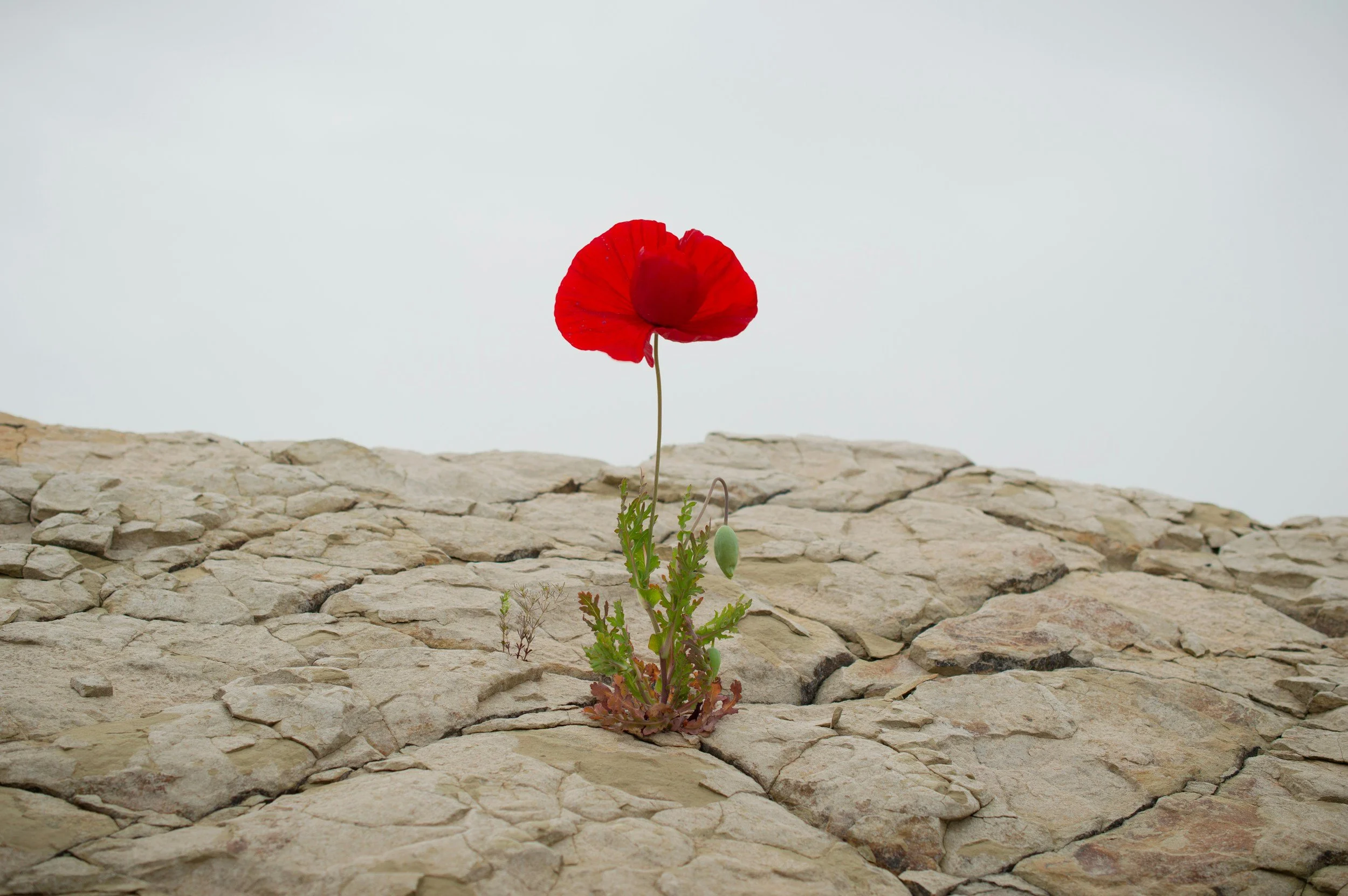
![A single red poppy flower growing through cracks in dry, cracked soil under a cloudy sky.]()
08. Team resilience and emotional intelligence
Sustaining performance under prolonged uncertainty.
-
![A digital artwork of a human brain made of interconnected nodes and lines, floating above a pedestal on a grid floor with purple and blue hues.]()
09. Leading with AI, wisely
Integrating AI as a partner. Preserving human judgement. Helping teams navigate role redefinition without losing trust.







How we work
Systemic diagnosis
Stakeholder interviews + needs analysis to align the right toolkit
Team identity that holdsCollective intelligence
Facilitated workshops + collective sessions
Psychological safetyIndividual coaching
1:1 sessions with key team members
Real feedback cultureAnchoring
Check-ins at 3 and 6 months + booster sessions
Faster, aligned decisionsTeam Coaching Method | UTP Coaching Solutions | Nawal Bendefa
What grounds this work
-
Organisation and Relationship Systems Coaching. Working with the relationship as the client, not just the individuals.
-
Systemic team coaching grounded in over 30 years of research on team effectiveness and resilience.
-
A diagnostic framework: absence of trust, fear of conflict, lack of commitment, avoidance of accountability, inattention to results.
-
Validated assessment tools for emotional intelligence and leadership behaviours.
-
For leadership growth with measurable, witness-validated impact.
-
My proprietary strengths-based methodology, used as the entry point for collective self-awareness.
Outcomes we commit to, with realistic timelines. Coaching is not magic, it needs consistency and courage.
Some changes show up in weeks.
Others take a year.
What you get out of it
By month 3
Shared language for what was previously implicit
Visible improvement in how meetings end (decisions, not avoidance)
Individual leaders aware of their own contribution to team dynamics
By month 6
Real feedback flowing in multiple directions
Conflict being named, not absorbed
A team identity that holds when one person is absent
By month 12
Psychological safety embedded in everyday behaviour, not just in workshops
Faster decision-making because alignment is real
A team that can coach itself before bringing us back in
What clients say
“…Nawal guided our managers through a learning experience that combined 1:1 coaching, team coaching and facilitation. The feedback was overwhelmingly positive — greater self-awareness, stronger communication, real behaviour change…What stood out most was her ability to tailor everything to our specific needs and translate complex concepts into actionable insights.”
Nicole Norris
T-Knife Therapeutics
"Nawal delivered a tailor-made team coaching for 15 people — well rounded and participative. We co-created the way forward together. I would recommend her to any team wanting to build positive collaboration."
Paschasie Ganga
European Women Lobby

Questions we hear
How long before we see results?
1
Some shifts are visible in weeks: how meetings end, whether feedback gets given. Deeper behavioural change typically lands between months 3 and 6. Embedding to the point where the team coaches itself takes 9 to 12 months. We design timelines that match what you are actually trying to change.
Team building is an event. Team coaching is a journey. Team building generates energy that fades within weeks. Team coaching works on the structure underneath the energy: the relationships, the patterns, the agreements. Both have a place. Most organisations confuse one for the other.
What is the difference between team coaching and team building?
2
Do you work with fully remote teams?
3
Yes. About 40% of our team coaching mandates are fully remote or hybrid. The methodology adapts. The work is no less deep, but the rhythms and rituals are different.
How does individual coaching fit into a team engagement?
4
Most team coaching journeys include 1:1 coaching for the team leader, and often for 2 to 4 other key members. It accelerates everything. The individual work is fully confidential and never used to report on participants.
How do you measure impact?
5
We agree on success indicators at the diagnosis stage, both qualitative (observed behaviours, team narrative) and quantitative (engagement scores, decision speed, retention, specific KPIs that matter to you). We run a baseline at the start and revisit at 3, 6 and 12 months. No vanity metrics.
What does this cost?
6
We discuss the desired outcome and the budget. Engagements typically range from €5k to €12k+, depending on team size, complexity, geography and duration. A short scoping call gives us both clarity on what is and is not in scope before we propose anything.
GET IN TOUCH
Ready to talk?
Tell me what is not working. I will tell you honestly if we are the right partner, and what kind of engagement would actually move things.
No pitch. No pressure. No commitment.
A real conversation. In English, French or Arabic.